Planning · Worldwide
Food tours with dietary restrictions, allergies and special diets
Every guest who books tells us what they do not eat, and every kitchen on the route hears about it before you land. Here is what is easy, what is hard and what we will tell you plainly.
By Hannah Pruitt, Founder
· 4 min read
Pickle stall, Kyoto Photo: Forkful Field Trips, Original image
A food tour can work for almost anyone with a dietary need, as long as we know early and the kitchens know too. What changes is the country. Some diets that are easy in Italy are hard in Japan, and the reverse. This is what we have learned from planning menus in Europe, Japan, Mexico and the United States.
How we brief kitchens
When you book, Lena asks about diets, allergies and anything you simply dislike. Priya in our office then writes to every restaurant, cooking school, market stall and producer on the route at least two weeks before you travel, in their own language, and your host calls the ones that matter most. Each host also carries a short card in the local language that explains your needs, so that at a crowded pintxos counter or a small izakaya nobody has to rely on gestures.
Those two weeks matter. They give a cooking school time to buy gluten-free flour and a village kitchen in Crete time to plan a vegetable dish to stand in for the lamb. On the day itself, a kitchen can do far less.
- Tell us what you avoid and why: preference, intolerance or allergy
- For allergies, tell us how severe the reaction is
- Bring your own medication and show your host where you keep it
- If you are unsure at a stop, skip the dish; your host will find you something else
Vegetarians in Japan: the dashi question
Japan is the hardest country on our list for vegetarians, and not for the reason people expect. There is plenty of tofu, rice and vegetables, but almost everything savory is built on dashi, a stock made with kombu seaweed and katsuobushi, dried bonito flakes. It is in miso soup, noodle broths, the dipping sauce for tempura, simmered vegetables and many pickles. A dish that looks entirely vegetable often is not.
The good news is that Kyoto has a long Buddhist tradition of shojin ryori, temple cooking with no meat or fish, where the dashi is made from kombu and dried shiitake. On our Japan Food Tour we plan a temple meal in Kyoto for vegetarian guests, ask the cooking class for a kombu dashi and order separately at every izakaya. A few market tastings will still be skipped, and we say so up front. Gluten-free guests need care too, because soy sauce is brewed with wheat; tamari is the usual answer.

Gluten-free in Italy
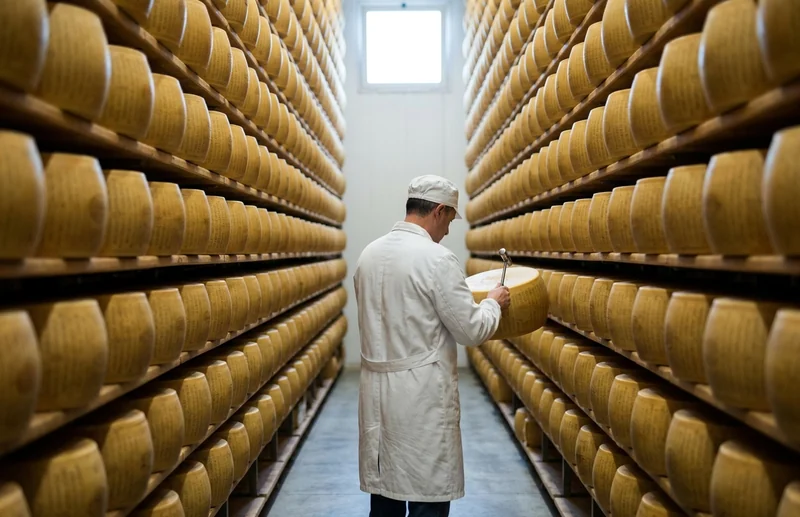
Italy, the country of pasta, is one of the easiest places in the world to be gluten-free. Celiac disease is widely tested for and well understood, “senza glutine” appears on menus everywhere, and pharmacies and supermarkets sell gluten-free pasta and bread. Restaurants take cross-contamination seriously. Many of the best foods are naturally free of gluten anyway: Parmigiano Reggiano, prosciutto, traditional balsamic, risotto, polenta, grilled meat and Sicilian granita.
The exception is a pasta class. Fresh egg pasta is made with soft wheat flour, and gluten-free dough tears and handles differently. On the Emilia-Romagna Food Tour the cooking school prepares a separate gluten-free dough and a clean station, and you still learn the folds. It is not quite the same, and we would rather tell you now.

Pork in Spain, lard in Mexico
If you avoid pork, Spain needs care. Jamón, chorizo and morcilla turn up everywhere, and lard goes into some pastries and stews. Pintxos counters mix pork with everything else. It is entirely possible, because Spain also has superb fish, vegetables and cheese, but your host will order for you rather than let you pick off the counter. On the Andalusia Food Tour the bodegas pair fino with almonds, olives and fried fish just as happily as with ham.
In Mexico, lard is the hidden ingredient: it goes into refried beans, tamales and the asiento, a spread of pork fat brushed on Oaxacan tlayudas. Vegetarian Mexican food is excellent once kitchens know, from squash blossom quesadillas to bean and cheese tlayudas, and our host asks for vegetable oil at every stop.
Shellfish and other allergies
Severe allergies need an honest conversation, and we will never promise a kitchen is free of an allergen when it is not. Shellfish is the hardest: it is central to the Basque coast, Cádiz and Sanlúcar, Lisbon, the markets of Tokyo and Osaka and, of course, a Louisiana crawfish boil. Shellfish stock also goes into rice dishes and sauces where you would not see it. For a serious shellfish allergy we suggest tours where seafood is a side note, such as Emilia-Romagna or Tuscany. Nut allergies are manageable in most places but need care in Sicily, where pistachio and almond are in nearly every pastry.
Not drinking
Wine, sherry, cider, sake and mezcal are part of many tours, but they are always optional. We pour alcohol only for guests at or over the legal drinking age of the country: 18 in Europe and Mexico, 20 in Japan and 21 in the United States. Every pour has a non-alcoholic choice beside it: mosto, fresh grape juice, in the Spanish bodegas, roasted barley tea in Japan, aguas frescas in Mexico and good local juices everywhere else. Nobody keeps count, and nobody asks why.
Questions about diets on a food tour
Can vegetarians join a food tour in Japan?
Yes, with planning. We arrange kombu dashi, a temple meal in Kyoto and separate orders, and tell you which tastings you will skip.
Will you guarantee an allergen-free kitchen?
No, and we will say so. Before you book, we tell you exactly what each kitchen can promise.